Words: Chiaki Sakaguchi
Photos: Chiaki Sakaguchi, Tama Art University and Arts Initiative Tokyo
;Resize=(828,827) "笹岡由梨子が考える、アートと労働のすてきなあり方とは?")
笹岡由梨子が考える、アートと労働のすてきなあり方とは?
A Splendid Marriage of Art and Labor, as Proposed by Yuriko Sasaoka
メルセデス・ベンツ アート・スコープ@多摩美術大学 実施レポート
Mercedes-Benz Art Scope @Tama Art University Report
「メルセデス・ベンツ アート・スコープ」は、メルセデス・ベンツ日本が30年以上続ける文化・芸術支援活動で、これまで35名以上のアーティストに海外での滞在制作や展覧会の機会を提供してきた。レジデンスでの経験を共有し次世代の育成に役立てるため、今回から従来の滞在プログラムに加えて、多摩美術大学と連携をスタート。2023年の派遣作家で2023年8月から約2ヶ月間ドイツ・ベルリンに滞在した笹岡由梨子さんを招いて、特別講義と学生との映像制作という2日にわたるプログラムを実施した。
“Mercedes-Benz Art Scope” is a program that Mercedes-Benz Japan has been implementing for more than 30 years with the aim to support artistic and cultural work. Up to now, a total of 35 artists were given opportunities to stay, create and exhibit works overseas as part of the program. In addition to the regular residence program, this latest edition marks the start of an affiliation with Tama Art University, with the aim to share the experiences gained through these residencies, and utilize them for the training of a new generation of creators. Yuriko Sasaoka, who stayed and worked in Berlin, Germany, for about two months from August 2023, was invited for a 2-day program that comprised a special lecture and the production of a movie together with students.
アートと労働というテーマをめぐって
“Art and Labor” as a theme
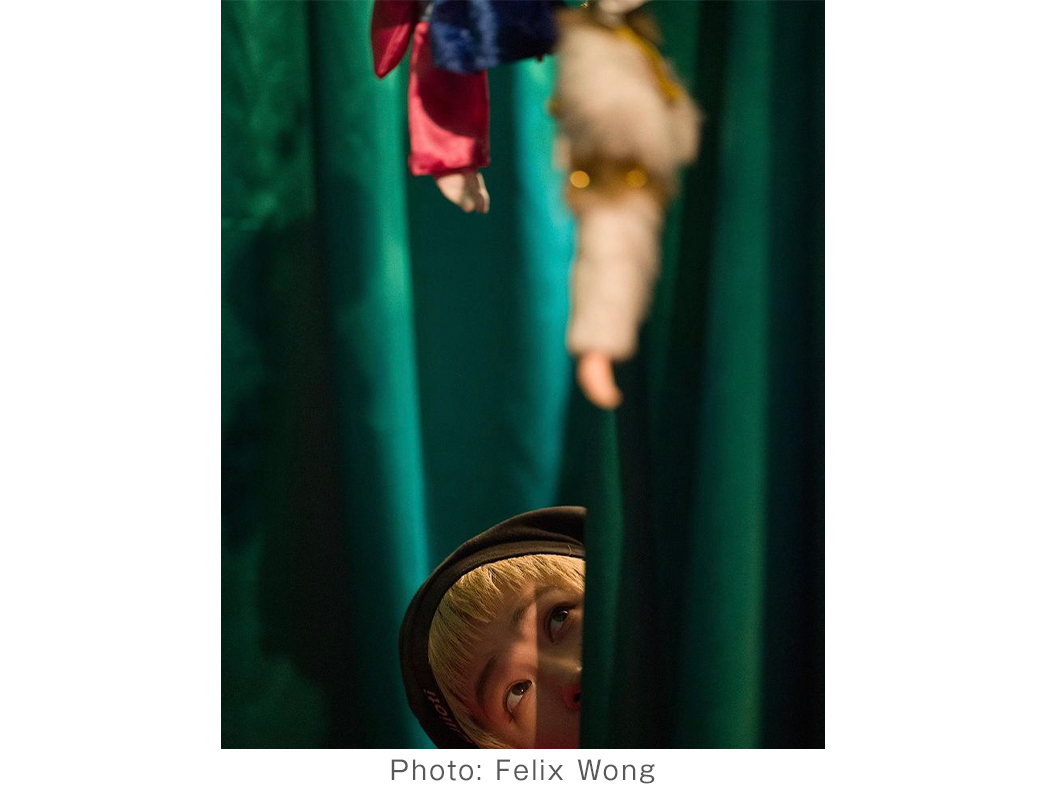
笹岡由梨子さんは、人形劇やアニメーションを思わせる映像作品や、映像と立体を組み合わせたインスタレーション作品を制作し、寓話や神話を通して歴史や社会の問題にアプローチする手法で、近年国内外での活躍が注目されるアーティストだ。人形の顔も役者も音楽も自分で手がけることに重きを置き、また映像編集にあえてノイズを残し、アクシデントが起きそうなハラハラしたライブ感を加えることで、絵画のような物質感や手の痕跡が伝わる独特の映像世界を作り出している。
大学在学中から作品を発表している笹岡さんだが、アーティストとして自活できるようになったのはここ数年のこと。香港のギャラリーに所属したことをきっかけに海外で作品が売れはじめ、発表の機会も増えた。昨年から京都の大学でも週3回教えており、アーティストとして堅実にキャリアを積んでいる一方、大学の仕事と自分の制作の時間のやりくりが新たな課題となっている。多摩美術大学での特別講義では、自身の制作状況やリアルな経済実態をつまびらかに紹介し、こうした制作環境の変化からアートと労働に関心を持つようになったと語った。
Yuriko Sasaoka creates movies reminiscent of puppet theater and animation, as well as installation that incorporate imagery and three-dimensional objects. Using fables and myths as vehicles for her unique approach to historical and social issues, her work both in Japan and abroad is increasingly gaining public attention. The artist places importance on the fact that she makes everything – from the dolls’ faces to the acting and the music – herself, while at the stage of editing the video footage, she deliberately leaves some noise in order to add a thrilling, “real-life” quality that is also open to accidents. The result is a unique type of movie with the texture of a painting, complete with the visible traces of the artist’s hand.
Although she has been making artworks since her time at university, it was only a few years ago that she became able to support herself through her creative work. Thanks to a gallery in Hong Kong, her works started to sell outside Japan, after which opportunities for presenting works on the international stage increased. While steadily building a career as an artist, which since last year also includes teaching at a university in Kyoto three days a week, juggling artistic activities and a day job posed a new challenge in terms of time management. In the Special Lecture at Tama Art University on the first day of this program, Sasaoka outlined in detail the circumstances surrounding her creative work, including her actual economic situation, while explaining how these changes in her working environment sparked in her interest in the relationship between art and labor.
「今までは全部一人でつくっていたけれど、最近は単純作業の一部を、アルバイトを雇ってお願いするようになりました。その間自分は大学に教えに行くのですが、まるで人件費のために出稼ぎに出ているような感覚に陥ることがあり、その違和感がベルリンでのパフォーマンスに繋がっています。」
参考記事:「アーティストとしての原点に回帰させてくれたベルリンでのレジデンス生活」(メルセデス・ベンツ日本株式会社ウェブサイトより)
ベルリンでは、動物と労働というテーマのもと、手作りの着ぐるみをまとい、ベルリン市のシンボルの動物である熊となってマーケットへ行き、出会った店の人々の意図に沿って踊ったり、カードを配るなどのパフォーマンスをしてその模様をビデオに収めた。言葉や社会ルールの違いなどで、なかなかパフォーマンスが思うように進められなかった時に、ならばいっそ、その状況に身を任せてみようと意識を切り替えたことで得られたアイデアだったという。
“I used to do everything by myself, but recently I hired part-timers who do some of the simpler tasks for me. In the meantime, I do my teaching job at the university, which sometimes feels to me as if I were doing my daily work only to pay them. That odd feeling is what inspired the performance that I showed in Berlin.”
Reference article (from the Mercedes-Benz Japan website):
"Residency in Berlin brought back to the roots as an artist"
In Berlin, inspired by the “animals and labor” theme, she made a bear (the symbol of Berlin) costume, went to the local market wearing that costume, and staged a performance, dancing or distributing cards in response to requests from the shops owners. The entire scenery was captured on video. The inspiration for this came from Sasaoka’s experience of performances that didn’t go as planned due to problems related to language or social rules, which prompted her to switch her mindset to placing herself in the hands of the situation and those around her.
「いつもは人形を操る側にいる私が、マーケットの人々に操られる側になって演じることで、自分が動物と人間の間で俯瞰する存在のようになりました。また着ぐるみの姿を見ると、みんなちょっと油断するので、それで心を開いてくれることもあるし、逆に社会にストレスがあると警戒されたりと、いろいろなリアクションが引き出されました。このベルリンでの手法を多摩美でもやってみたら、一体何が立ち上がってくるのか見てみたいと思いました。」
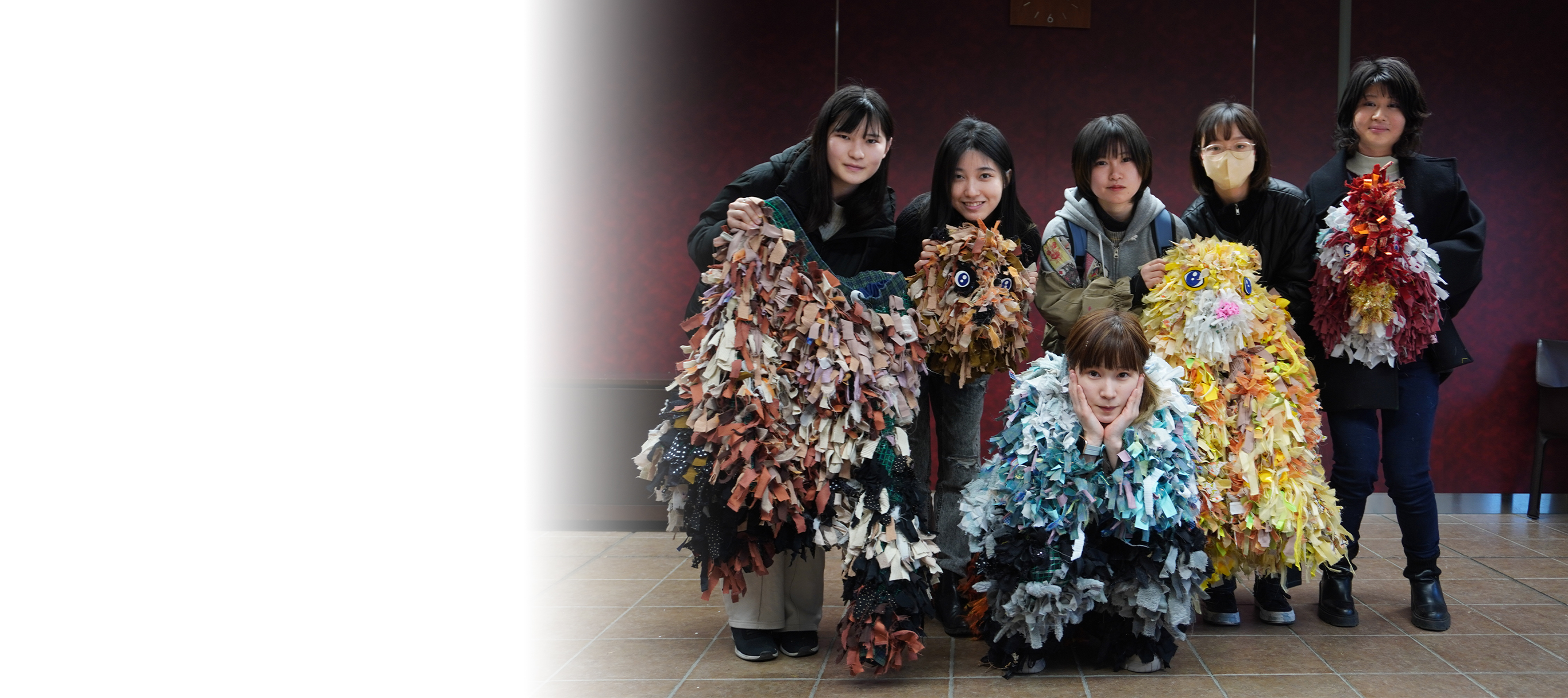
特別講義のあとは、多摩美での動物による労働寓話の撮影に向けたワークショップ。ポーランドの英雄として親しまれている熊の兵士「ヴォイテク」、ソビエトの宇宙開発時代にスプートニク号で宇宙へ行った犬の「ライカ」など、人間のために労働した動物の英雄物語が語り継がれるように、多摩美キャンパスにかつていた動物たちの労働寓話を、学生といっしょに作ってビデオに残し、動物たちの存在を語り継ぎたい。そこから、私たちの労働とはなにか、作品制作は労働かといった素朴な疑問を考察しビジュアル化するのが狙いだ。脚本、監督、撮影は学生が担い、笹岡さんが動物を演じる。ワークショップでは、職員の証言や資料を参考に、かつて多摩美に実際にいた動物について調べた。そして、彫刻科のデッサンのモデルとして飼われ、学生の靴を攻撃する癖のある鶏、学食付近に住みつき学生と職員に愛されていた猫、多摩丘陵に住み時々キャンパスに遊びに来ていた野生のタヌキの3匹がモチーフに選ばれた。
“I am usually the one who operates the puppets, but this time I played the puppet myself, to be operated by the people around me at the market. This put me in the position of an observer, between humans and animals. The reactions my performance triggered varied, from the relaxed and freeminded stance that usually sets in when seeing someone in an animal suit, to a rather anxious response from people that are plagued by some kind of social stress. So I began to wonder what might happen if I took that same method that I tried in Berlin, and applied it at Tama Art University as well.”
The Special Lecture was followed by a workshop on the filming of fables about working animals at Tama Art University. There exist various hero stories about animals that worked for the sake of humans, such as Wojtek the Bear, a popular war hero in Poland, and Laika, the famous Soviet “space dog” who traveled to space in a Sputnik 2. The idea was to create with the students fables about working animals that once existed on the Tama Art University’s campus, capture the stories on video, and continue to spread the word of those animals. And from there, to explore and visualize what exactly labor means to us, along with the simple question whether producing artworks is a form of labor too. Script-writing, directing and filming were all done by students, while Sasaoka played the respective animals. At the workshop, studies were conducted about animals that actually once lived on the campus of Tama Art University, based on documents and accounts of the university staff. Three animals were eventually selected as protagonists: a hen that was kept as a model for students at the sculpture course, and that had a habit of attacking the students’ shoes; a cat that lived around the school canteen and that everyone loved; and a wild raccoon dog that used to come down from the Tamakyuryo Hills to play on the campus from time to time.
撮影にあたって、笹岡さんから学生へのリクエストはふたつ。ひとつは、動物による労働寓話の絵コンテを4コマ漫画でつくること。もうひとつは、その動物のイメージの色に近い古着などを短冊状に切って笹岡さんに送ること。事前の段取りや連絡はすべてLINEグループで行われ、はじめは控えめだった学生たちも、笹岡さんからの直前の連投に追い込まれるように走り出して、シナリオづくりには6人、撮影には5人が参加した。
For the project, there were only two requests from the artist to the students: to create storyboards of “labor fables with animals” in the form of 4-frame cartoons, and to cut old clothes, in colors that roughly match the image of each animal, and send her the scraps. All communication before and during the project was done as a LINE group, and driven by Sasaoka’s repeated last-minute pitching, and even those students who were rather shy at first eventually got up and ran along. Six of them were involved in the script-writing, five in the video shooting.
多摩美での動物寓話から見えたもの
Things learned from the fables made at Tama Art University
撮影日当日、冬休みに入って静かな多摩美キャンパスは、穏やかな快晴の撮影日和。用意した5本のシナリオに沿って5人の学生が、監督と撮影と演者をかわるがわる交代しながらキャンパスのあちこちで撮影を行った。それぞれの撮影にかけられる時間は45分と短い。しかし、そこは普段から制作の現場にいる美大生。やり方を覚えるとすぐに乗ってきて快調に撮影は進み、夕方までに5本すべてを撮り終えた。
The shooting took place in ideal conditions, on a pleasantly sunny day during the winter holidays when things were quiet on the campus. For the videos based on five different scripts, five students took turns with directing, filming and acting duties, while moving from one location on the campus to the next. For each video, we only had 45 minutes to shoot, but as these were art students that are used to doing creative work “on the spot,” once they had familiarized with the theory, they had no problems putting it into practice. As a result, the filming went so smoothly that all five videos were in the can by the end of the day.
笹岡さんは、今回はあえて準備を少なくして現場に任せる方法をとった。それは、自分の制作で忙しい学生たちに負担をかけないようにという笹岡さんの配慮だったが、結果、小道具や撮影場所など詳細な詰めがギリギリとなり、期せずして笹岡さんの作品にも通じるハラハラしたライブ感を生み出すこととなった。時間がなくどんどん決めて進めなければならない切羽詰まった状況が、皆の現場力を引き出したと同時に、現場に立ち合っていた教員を含めそこにいる人全員が駆り出されることになり、工事現場のシーンでは、その日多摩美で作業をしていた本物の工事現場の人も休憩時間を使って出演してくれた。周囲を巻き込みながら進む撮影は即興的で、快活なテンポと集中力があった。
Sasaoka had decided to focus on the actual creation process itself, with little preliminary preparation. While this was primarily out of consideration for the students who are generally busy with their own creative work, and thus shouldn’t be burdened unnecessarily, this often involved last-minute decisions regarding details like props and shooting locations, resulting in videos that had unexpectedly much of that “real-life” thrill that also Sasaoka’s performance was charged with. Being driven into a corner and forced to move on without thinking too much, was for the students a situation that brought out their improvising skills at the work site, while at the same time, for the teachers and others who were present at the location, it meant getting roped in here and there. For a construction scene, real construction workers that happened to be on the campus jumped in during their lunch break. The shootings, sometimes involving bystanders and onlookers, were a mixture of improvisation, speed and concentration.
笹岡さんはまた、周りの人の手を借りることで、一人で完結しないものづくりを学生たちに経験してほしかったという。場所の選定、撮る順番、演出、カメラポジションなど、その都度カメラマンや役者に伝えなければならない映像制作では、監督のコミュニケーション力は重要な鍵となる。
「自分のビジョンを相手に正確に伝えるのはすごく難しくて、どういうふうに言えば相手に伝わりやすいのか、私もいつも苦労しています。でも毎回すごく勉強になるので、学生さんにも、監督という役回りを通じて自分の意図を伝える難しさを経験してほしいと思いました。自分がこうしたいと伝えたことを、みんなが受け取って協力してくれるのは気持ちがよいことです。一人でつくっていても、グループワークの経験はきっと役に立つと思います。」
Sasaoka later explained that she wanted the students to experience first-hand how seeking help from those around can help finish something that cannot be done by one person alone. When shooting movies, the director’s communication skills are crucial, as for every single scene, things like shooting location and order, choreography and camera position, need to be communicated to the cameraman and the actors.
“Communicating one’s own vision accurately is a difficult thing, and I often struggle with finding the best words for conveying my own ideas. But at the same time, it is always a very good lesson for myself, so I thought that it would be immensely helpful for the students if they could experience that difficulty of communicating their ideas, by playing the role of the director. It is a very nice feeling to tell people how you want something to be done, and then see them cooperate in order to get it done as you have envisioned it. That experience of group work is certainly helpful even when you eventually do something by yourself.”
動物三役をこなす笹岡さんの奮闘と並んで、今回のワークショップで最も印象的だったのは、5人の学生、教員、コーディネーター、工事関係者といった人々が、立場の違いを超え、映像制作という一つの目的のために動いていたところだ。それぞれの役割や思惑をいったん脇に置いて、「私はこれがつくりたい」という5人の意志を受け止めて協力しあった。アートの制作という限られた場面ではあっても、異なる意見を尊重し、一人ひとりの創造力を信頼して支え合うその光景は、多様な社会、創造性豊かな社会の小さなモデルとして見ることも可能だ。笑いながらノリノリで参加してくれた工事現場の人々にとって、あれは労働だったのだろうか。学生は労働か。それをサポートする教員は労働か。生きるために必要な労働とは、一体どんなものだろうか。今回のワークショップは、社会や労働のあり方を考えるワークショップとしても、考えるところが多いものだった。
Along with Sasaoka’s efforts playing the three animal characters, one of the most impressive things about this workshop was that a group of people worked together to produce one video, regardless of their very different positions: five students, teachers, coordinators and construction workers. Putting aside their own respective functions and ideas, they accepted what the five students’ requested in order to get something done the way they wanted, and cooperated. Even though limited to the production of an artwork, the scenery of people respecting different views, and supporting and relying on each member’s creativity, can be seen as a miniature model of a diversely creative human community. The construction workers obviously had fun playing their roles, so was it a form of labor for them this time? Was it for the students? Or for the teachers that supported them? What exactly is it that defines “labor” as something that we do for a living? Also as an occasion for pondering such questions related to society and labor, it was a workshop that provided much food for thought.
「自分のワークショップですが、物語に私の意思は入っていません。学生さんの意のままに私が動いている点では、労働だったのかなと思います。一方、学生さんは、私のワークショップのなかで、自分でシナリオを作って監督をしている。労働が入れ子状になっている状態で、さらに工事現場の人たちの存在もあって、労働についてのいろいろなヒントをもらった気がします。」
“There were none of my own ideas in this entire workshop. I acted as the students requested me to, and in this sense, it was probably a form of labor. On the other hand, the students who participated in the workshop made the videos, based on the scenarios and direction they had worked out. So it was kind of a nested structure of labor within labor, and with the additional involvement of actual construction workers, I feel that the experience of this workshop provided me with a number of hints regarding labor.”
自分の安全圏から脱してみる
Leaving one’s comfort zone
笹岡さんのベルリン滞在から生まれた作品《Animale/ベルリンのマーケットで働くクマ》は、平⾯美術の領域で優れた若手作家を紹介するVOCA展2024で佳作賞を受賞した。そして今回撮影した5つの物語は、2024年3月23日から5月26日の間、千葉県で行われる「百年後芸術祭-内房総アートフェス-」で、立体平面インスタレーション作品の一部となって発表される予定だ。ベルリン滞在から多摩美での撮影まで一貫した「動物と労働」というテーマは、今後もずっと考えなければならないが、次回で一旦答えを出して次に進みたいという。
アーティスト・イン・レジデンスは、アーティストがこれまでの慣れた環境から離れて自身の制作を振り返る時間であるとともに、新しいチャレンジに踏み出すチャンスにもなる。今回ベルリンでパフォーマンスの新しいかたちを実践できたことは、笹岡さんの大きな自信につながった。そして、それを後輩たちにも伝えたいと願っている。
The work “Animale” that was inspired by Sasaoka’s residency in Berlin, was awarded at the 2024 VOCA exhibition that showcases outstanding efforts by young artists in the field of two-dimensional art. The five episodes that the artist and her students filmed during this workshop, will be presented as parts of a larger installation combining two- and three-dimensional elements, at the art festival “100nengo art festival” in Chiba, from 23rd March 2024 to 26th May 2024. While the theme of “animals and labor,” which the artist has been addressing throughout her residency in Berlin and the successive video production at Tama Art University, is something that she deems necessary to keep exploring in her work, Sasaoka mentioned that she will present some kind of conclusion in her next project, in order to move on.
A residency is for artists an opportunity for stepping out of their familiar environments and reflecting on their creative work, and at the same time, it is a chance for embarking on new, challenging endeavors. Being able to realize in Berlin a novel form of performance, was for Sasaoka an experience that significantly boosted her confidence, and that she absolutely wants to share with younger generations of artists.
「作家として考えることの多い年でしたが、自分の安全圏から脱してベルリンで制作する機会を頂けたことは本当によかった。思い通りにいかずに追い詰められることで、今までできなかったことができるようになったり、自分はこれが得意と思える部分がふと見つかったりします。自分だけの武器を自覚すると強くなれるし、応用も効くようになる。今回のレジデンスでの経験を思い出して、今後10年、20年先もやっていける気がします。こういう経験を、学生の皆さんにもぜひして欲しいですね。」
“It was a year during which I had quite a lot of things to think about as an artist. I was truly fortunate to be given the opportunity to leave my own comfort zone and work in Berlin. Being driven into a corner when things didn’t seem to work out, was an experience through which I learned how to do things that I used to be unable to do, and I casually discovered aspects of my work that I may actually be rather good at. Becoming aware of one’s own forte gives one strength, and hones one’s ability to apply it. When looking back on this residency, I feel that it gave me the power to continue for another ten or twenty years. It was an experience that I would also like my students to make.”
メルセデス・ベンツ アート・スコープ@多摩美術大学
2023年11月27日 ドイツ派遣アーティスト笹岡由梨子による特別講義
「こんにちは!メルセデス・ベンツ アート・スコープ参加作家の笹岡由梨子です」
2023年12月26日 笹岡由梨子と学生の共同映像制作
「動物労働寓話@多摩美」~動物たちと学ぶ、私たちの労働~
企画協力:
NPO法人アーツイニシアティヴトウキョウ[AIT/エイト]
撮影協力:
鹿島建設株式会社
参加学生:
小野真理恵(多摩美術大学絵画学科油画専攻2年)
植松美咲(多摩美術大学絵画学科油画専攻3年)
弓気田芽衣(多摩美術大学絵画学科油画専攻3年)
古山寧々(多摩美術大学大学院美術研究科 博士前期課程デザイン専攻情報デザイン研究領域1年)
太田幾(多摩美術大学大学院美術研究科 博士前期課程絵画専攻油画研究領域2年)
管新元(多摩美術大学大学院 美術研究科 博士前期課程デザイン専攻グラフィックデザイン研究領域2年)
担当教員:
小泉俊己(多摩美術大学副学長、美術学部長、絵画学科油画専攻教授)
久保田晃弘(多摩美術大学大学院EWS、情報デザイン学科メディア芸術コース教授、国際交流センター長)
ムーニー・スザンヌ(多摩美術大学大学院EWS、多摩美術大学国際交流センター准教授)
Mercedes-Benz Art Scope @ Tama Art University
- November 27, 2023
“Hello, I am Yuriko Sasaoka, an artist participated in Mercedes-Benz Art Scope!”
Special Lecture and Workshop with Yuriko Sasaoka, artist-in-residence in Germany 2023
- December 26, 2023
“Fables About Working Animals @ Tama Art University: Learning about labor from animals”
Video collaboration with students of Tama Art University
Cooperation/planning:
Arts Initiative Tokyo [AIT]
Filming cooperation:
KAJIMA CORPORATION
Participating students:
Marie Ono, 2nd year student at Tama Art University, Department of Painting, Oil Painting Course
Misaki Uematsu, 3rd year student at Tama Art University, Department of Painting, Oil Painting Course
Mei Yugeta, 3rd year student at Tama Art University, Department of Painting, Oil Painting Course
Nene Koyama, 1st year student at Tama Art University, Graduate School of Art and Design, Department of Information Design, Media Art Course
Iku Oota, 2nd year student at Tama Art University, Graduate School of Art and Design, Department of Painting, Oil Painting Course
Xinyuan Guan, 2nd year student at Tama Art University, Graduate School of Art, Department of Graphic Design
Teachers in charge:
Toshimi Koizumi, Vice President of Tama Art University, Dean of Faculty of Art and Design, Professor of Department of Oil Painting, Oil Painting Course
Akihiro Kubota, Chief Professor of Tama Art University Graduate School Project EWS, Professor of Department of Information Design, Media Arts Course, Manager of International Exchange Center
Suzanne Mooney, Associate Professor of Tama Art University Graduate School Project EWS, International Exchange Center
PROFILE
笹岡由梨子 / Yuriko Sasaoka
1988年、大阪府生まれ。2012年、京都市立芸術大学美術学部油画専攻卒業。2014年、同大学院美術研究科修士課程油画専攻修了。2017年、同博士(後期)課程メディア・アート専攻満期退学。現在、京都精華大学特任講師。2018年に京都市芸術新人賞、2019年にKyoto Art for Tomorrow2019-京都府新鋭選抜展-最優秀賞、2020年に京都府文化賞奨励賞・咲くやこの花賞、2024年にVOCA佳作賞を受賞。
Born 1988 in Osaka, Japan. Graduated from Kyoto City University of Arts with a BA in Oil Painting in 2012, completed her MA in Oil Painting at Kyoto City University of Arts in 2014. Doctoral course in Media Art at Kyoto City University of Arts (completed without degree in 2017). Presently specially-appointed lecturer at Kyoto Seika University. Kyoto City Art Newcomer Award, 2018. Kyoto Art for Tomorrow 2019 – Kyoto Prefecture New Artists Selection Exhibition – Grand Prize. Kyoto Prefecture Cultural Award Encouragement Prize, Sakuya Konohana Award 2020, VOCA honorable mention (Kasako) 2024.
Born 1988 in Osaka, Japan. Graduated from Kyoto City University of Arts with a BA in Oil Painting in 2012, completed her MA in Oil Painting at Kyoto City University of Arts in 2014. Doctoral course in Media Art at Kyoto City University of Arts (completed without degree in 2017). Presently specially-appointed lecturer at Kyoto Seika University. Kyoto City Art Newcomer Award, 2018. Kyoto Art for Tomorrow 2019 – Kyoto Prefecture New Artists Selection Exhibition – Grand Prize. Kyoto Prefecture Cultural Award Encouragement Prize, Sakuya Konohana Award 2020, VOCA honorable mention (Kasako) 2024.
;Resize=(600,450) "笹岡由梨子 / Yuriko Sasaoka")