Words: Chiaki Sakaguchi
Photos: Chiaki Sakaguchi, Tama Art University and Arts Initiative Tokyo
Video stills: Annika Kahrs & Produzentengalerie Hamburg
;Resize=(828,828) "音楽を通して見える世界の構造")
音楽を通して見える世界の構造
The Structure of the World, Revealed through Music
アニカ・カースとエクスペリメンタル・ワークショップ
Experimental Workshop with Annika Kahrs
メルセデス・ベンツ日本合同会社の文化・芸術支援活動「メルセデス・ベンツ アート・スコープ」は、アーティストが海外に滞在するアーティスト・イン・レジデンス事業を通して日本とヨーロッパの若手アーティストの活動を30年余にわたりサポートしてきた。2022年より多摩美術大学と連携し、日本とドイツのアーティストのエクスチェンジプログラムに加え、その経験を学内でのワークショップの形で次の世代と共有する新たなプログラムを実施している。2022-2024年のドイツからの招聘作家であるアニカ・カースは、2024年9月から2ヶ月半東京に滞在し、音に関する幅広いリサーチを行った。その滞在も終盤となった11月後半、多摩美術大学大学院のエクスペリメンタル・ワークショップ講師として、トークとワークショップ「Shifting Sounds - on the possibilities of sound and music in visual arts」を開催した。
A program of Mercedes-Benz Japan to promote cultural and artistic activities, "Mercedes-Benz Art Scope" has been supporting the endeavors of young artists from Japan and Europe through overseas residencies for more than thirty years. Associated with Tama Art University since 2022, Mercedes-Benz Art Scope exchange programs for artists from Japan and Germany were further expanded to include workshops at the university, as occasions for sharing experiences with artists from the next generation. One of the participants from Germany in 2022-2024 was Annika Kahrs, who came to Tokyo for two and a half months in September 2024, whereby she conducted research broadly related to sound. In late November, during the final stage of her stay, Kahrs was invited as instructor for the Tama Art University Graduate School’s Experimental Workshop, and the talk session and workshop “Shifting Sounds – on the possibilities of sound and music in visual arts” were held with the artist’s participation.
1日目:トーク
Day 1: Talk Session
ハンブルクとベルリンを拠点に活動するアニカ・カースは、ビジュアル・アーティストとして音を作品の中で扱ってきた。音楽の形式を超えた幅広い音に注目し、世界にあふれる音響情報が持つ意味を綿密に探り、精巧な映像インスタレーションをつくりあげる。これまで多くの賞やスカラシップを受賞し、大きな国際展にも数多く参加する実力派アーティストだ。トークでは、サウンドとアート、社会との関係性を探るこれまでの作品を紹介する一方、カース自身が、大学院を卒業してからどのようにアーティストとして身を立て、作品を発表してきたかという具体的なエピソードを通して、ドイツやヨーロッパで活動するアーティストの実態についても語った。
Based in Hamburg and Berlin, Annika Kahrs has been working as a visual artist with a special focus on the subject of sound in a broad sense, also beyond the framework of “music.” Her elaborate video installations are based on the artist’s detailed investigations into the meanings behind the flood of acoustic information that we are confronted with in daily life. Kahrs has so far won numerous awards and scholarships, and has been invited to participate in major international art exhibitions as an accomplished artist. In the talk session, she introduced some of her previous works discussing the relationships between sound, art and society, while outlining the path of her own career from a university graduate to an established artist, interspersed with concrete episodes and information related to the situation of artists in Germany and Europe.
音楽の行為そのものに関する初期のパフォーマンス作品等を経て、やがて自分の関心が、音楽が生み出される人や場所の歴史、社会構造とのつながりの方にあると気づいたという。2018年、黒人でクィアのミニマル・ミュージックの作曲家、ジュリアス・イーストマンをテーマにした展覧会では、『ゲイ・ゲリラ』という楽曲を生み出した背景とその曲の歴史に注目した。
「イーストマンについてリサーチするうちに、『ゲイ・ゲリラ』という曲の元に、宗教改革を唱えたマルティン・ルターの讃美歌があることを知りました。この曲は反戦や反核運動、労働闘争、差別解放運動など、あらゆる世紀のプロテストの場面で使われてきた歴史を持ち、イーストマンはそうした曲の歴史と、自身に向けられる偏見や抑圧への抵抗を重ねて『ゲイ・ゲリラ』を作曲したのです。イーストマンはとてもスピリチュアルな人でしたが、宗教制度にはむしろ懐疑的で、その制度的構造からの解放と自身の精神性が常に結びついており、『ゲイ・ゲリラ』にもそうしたプロテストと宗教の関連性が見て取れます。そこで、プロの作曲家に編曲を頼んで、オルガンと26人の口笛合唱団による楽曲の映像作品を構想しました。必要なイメージは明らかだったので、作曲家には『26人の口笛演奏者が挑むオルガンの音色との闘いで、最後にマラソンを終えた後ぐらい闘い疲れるような曲を』と依頼しました」
パイプ管を空気が通り抜けて音を出すオルガンは、その音の持続性から神の永続性を賛美する楽器といわれる。オルガンと口笛の穏やかな始まりから、徐々に波長が乱れ、ラストの8分間では息が続く限り全力で口笛を吹く演奏者たちの姿が映し出される。響き渡る口笛は、オルガンの永遠性に抗う人間の行為のようにもとれる。疲れ、へたり込みながら吹き続ける演奏者たち。見る側に苦痛と共感を引き起こす本作は、作曲家とコラボレーションをはじめ、大勢のパフォーマーとスタッフを動員した初めての大がかりな作品となった。
Kahrs explains how, after a number of early performance works revolving around the very act of making music, she became aware that her interest was primarily in the connections between music and the people, places, histories and social structures that produce it. In 2018, in an exhibition themed on Julius Eastman, a queer, black composer of minimal music, Kahrs focused on the history and backgrounds that inspired the composition of one of Eastman’s pieces, titled Gay Guerilla.
“During my research related to Eastman, I learned that Gay Guerilla was based on a hymn by Martin Luther, initiator of the Protestant Reformation, and that it has been used in various protest situations throughout the ages, such as anti-war, anti-nuclear, student or anti-discrimination movements. When writing Gay Guerilla, Eastman superimposed his own fight against prejudice and suppression on the historical background of Luther’s hymn. Although Eastman was very spiritual, he was rather suspicious of the institution of religion. For him, spirituality was always closely linked to protest against the institutional structures that represented it. I could also find the connection between protest and religion in this piece of music. I commissioned a professional composer to arrange the piece for organ and a 26-piece whistle chorus, whose performance I incorporated into a video work. The image that I had in mind was quite clear, so my request to the composer was to make it into “a battle between 26 performers whistling against the sound of an organ, until they are breathless like after running a marathon.”
An organ produces sounds by pumping air through pipes, and it is said that, based on the quality of that sustained sound, it has been regarded as an appropriate instrument for praising the permanence of God. Starting with calm organ and whistling sounds, frequencies gradually go wild, until in the last eight minutes, the performers are captured as they literally put their last energy and breath into their whistles. The concert comes across like a fight of humans against the organ’s sustained tones, some of them sitting down on the floor in exhaustion while somehow continuing to whistle. Evoking feelings of pain and empathy in those who watch it, this work marks the artist’s first attempt at a project that involves a large number of people, from the commissioned composer to the performers and production staff.
リサーチは作品への入口
Embarking on the Creative Process from Research
カースは綿密なリサーチを通して作品のコンセプトを探り、そこから長い制作の旅を始める。リサーチの範囲は、音の社会的機能から科学的特性まで幅広い。人の知覚の範囲を超えた低周波音や超音波について調べるうちに、キリンが夜にハミングすることを発見したカースは、そのハミングと類似した音色を持つ1850年製のoctobassという高さ3.5メートルのコントラバスとその演奏者を探しあて、科学に基づいたキリンのための曲の制作を依頼した。展示では、約3mのスクリーンを縦に置いた3チャンネルの映像インスタレーションを構築し、観客はスクリーンの間を縫うように鑑賞した。「巨大なキリンと楽器の視覚的インパクト、深い奇妙な音によって、鑑賞者の身体に反応を起こしたかった」とカース。
Kahrs conducts meticulous research in order to work out the concept for each of her works, and based on that, the long journey of the creative process begins. The subjects of her broad studies range from the social functions to the scientific properties of sounds. While doing research on low-frequency and ultrasonic sound beyond human perception, she discovered that giraffes have a habit of humming at night, which inspired her to hunt down an octobass – a 3.5-meter-tall upright bass with a timbre similar to that of humming – made in 1850, along with a performer, whom she commissioned with a science-based composition of a musical piece for giraffes. In her exhibition of a 3-channel video installation, three upright screens of about three meters were arranged so that visitors could walk between them, and connect the respective images and sounds. The artist explains about the work that she wanted to “cause a physical reaction in the viewer through the visual impact of the tall giraffes and the massive instrument, and the strange, deep sounds.”
2年の歳月と「全財産を注ぎ込んだ」この作品は高い評価を得たが、資金の調達、大勢の出演者やプロとの協働など、作品が大がかりになるほどマネジメントのプレッシャーもあがることを痛感したという。トークの中でカースはたびたびアーティストの経済的状況についてふれた。
「絵画と違って音響やパフォーマンスのアイデアは、空気のようにかたちがありません。また映像制作には多くの人手と資金と時間が必要で、準備に3年かかることもあります。その費やした時間に対しては、誰も報酬を払ってくれません。ドイツでは、アーティストのための伝統的な労働組合といったものは存在せず、アーティストは一般的にフリーランスとして働きます。フリーランスということは、特にキャリアの浅い頃は定期的な収入がないことを意味します。申請できる奨学金や助成金はいくつかありますが、枠が非常に限られていて競争も激しく、容易には得られません。それでも、そうした助成金やさまざまなサポートがなければ、私は今日ここにいないでしょう」
Kahrs put a total of two years of work and “all of [her] money” into this work, and while it eventually received high acclaim, as the project grew in scale, it reportedly made her keenly aware of the growing pressure on her management in terms of fundraising and collaboration with numerous performers and other related professionals. In the talk session, she repeatedly pointed out the financial situation of artists.
“Different from painting, ideas for things like performances or sound art are as formless as air. Add to that the manpower, time and budget that making a video requires. It can take up to three years, and no-one pays you for all that time that you have spent. In Germany there is no such thing like a traditional union, as artists generally work as freelancers. Working as a freelance artist, especially at the beginning of your career, means that you don’t have a regular income. However, there are some scholarships and fundings that you can apply for. These scholarships and fundings are, of course, very limited and therefore highly contested. It is not easy to get them. But without them and the various support that I have received, I would not be here today.”
誰がそのサウンドスケープをつくっているのか
Who Makes the Soundscapes?
古い倉庫や駅、教会など、特別な歴史を持つ大きな空間では、見えない記憶を呼び覚ます装置として音が効果的に作用する。そうした複雑な空間こそ、音を扱うカースの作家性が際立つ。ハンブルクの港で植民地時代の記憶を留める最後の巨大倉庫を舞台にした作品「How to live in the echo of other places」では、さまざまな場所からやってきた人々の個人的な記憶を空間に重ねた。昼間は、11台のスピーカーによるサウンド・スカルプチャー。日没から日の出までは、外壁スクリーンに夕陽と人々の言葉を投影して、この場所に流れていた昼と夜の再現を試みた。制作に3年を要した、カースが手がけた中でも最大規模の作品だ。
In old warehouses, railway stations, churches or other spacious settings with a history of their own, sound can be used as an effective means for evoking invisible memories. It is exactly such complex architectural spaces, that particularly highlight the characteristics of Annika Kahrs as an artist who works with sound. How to live in the echo of other places was set up in the last big warehouse in the port of Hamburg that is fraught with memories of colonial times, which the artist overlapped with the personal memories of people coming from various places. Shown during the day was a sound sculpture made up of eleven speakers, while in the hours between sunset and sunrise, images of the setting sun and people’s statements were projected onto a large screen on the exterior wall – an attempt at recreating the scenery at this place at daytime and at nighttime. It took Kahrs three years to make this work, which makes it her biggest project to date.
2022年の第16回リヨン・ビエンナーレの作品も、場所の記憶を深く掘り下げるものだった。今は使われていないサン・ベルナール教会の聖堂で複数のパフォーマンスを撮影した映像インスタレーション。聖歌隊が歌う中で大工が家の骨組みを建て、絹織物の紋紙を楽譜に見立てた歌が流れ、壊れたパイプオルガンが鳴り響く。構築と解体のプロセスに、リヨンの歴史を目撃してきた場所の記憶が交錯する。
「場所や空間とその歴史、そして生み出される音楽との結びつきは、私にとってますます重要になっています。それをどのように可視化、可聴化できるのか、その音楽はどこで誰によってつくられたのか、社会構造はどのようにつくられているのか。今聞こえる音楽の根源を探ることは、私にとって常に重要です」
The work that was shown at the 16th Lyon Biennale in 2022, is another that digs down deep into the memory of one specific place. It is a video installation comprising footage of several performances inside the disused Church of St. Bernard. A choir performing while a carpenter builds the framework of a house; singing based on scores in the form of silk-loom punch cards; and sounds of a broken pipe organ, are juxtaposed to express the cycle of construction and dismantlement, and express the memories of a place that bears testimony to the history of Lyon.
"The connections between places or spaces, their respective histories, and the music that is created there, are becoming more and more important to me. I am interested in the questions of how I can make those visible or audible, who made that music and where, and how the society is structured. Trying to identify the origins of the music that I hear today has always been an important part of my work.
最新作「La Banda」は、イタリアの山岳部の小さな村、オレーヴァノ・ロマーノでのレジデンスの際に、村のブラスバンドとコラボレーションして撮影された。静まりかえった急峻な石畳みの路地や広場で、演奏者が一人ずつ合流していき、丘の上で全員で曲を奏でる。微笑ましくずれた旋律と、世代を越えたメンバーたちのクローズアップ。そしてフィナーレの直前、指揮者が後方に移動すると、全員が振り返り、眼下の村に向けて音楽を届ける。美しい景色と演奏を終えた人々の満足げな表情で締めくくられる映像は、コミュニティの変遷を暗示するとともに、音楽のもとに集まる人々のよろこびと、カース自身の音楽への愛情に満ちていた。
「人と一緒に、音楽と一緒に仕事ができる。このような環境に囲まれることはとても楽しいことです。いろいろな場所へ行き、作品制作を通して音楽と関わり、世界と関わる。それは音楽を作品に使う、ちょっとした言い訳かもしれません」
La Banda, her newest piece, was filmed during a residency in Olevano Romano, a small mountain village in Italy, in collaboration with the local brass band. One after another, the musicians join the band as they march through the silent village’s steep, stone-paved alleys and squares, until the band is complete and plays a piece of music at the top of the hill. Against the soundtrack of heartwarmingly off-key melodies, the members, spanning several generations, are shown one by one in close-up shots. Then the conductor indicates the start of the finale by moving to the back, after which all members turn around and play a tune for the village they look down on. Ending with beautiful landscape shots and the deeply satisfied faces of the performers after finishing their job, the movie hints at the changes in the community, while at once radiating the joy of people getting together in the name of music, and the artist’s own love of music.
“Being in an environment where I can work with music and together with people is a very pleasant thing. While visiting all kinds of places, I connect with music and with the world through my creative work. This may be a bit of an excuse for using music in my works.”
トークの最後にカースは学生たちに向けて、アーティストとして生き残るためのアドバイスをいくつか提案した。
「アーティストという職業は不思議な仕事です。一人で黙々と作業する能力が求められる一方で、社会性がなければならない。お金の管理も重要。そうした多くのことをこなしながら、創造性を発揮して作品を生み出さなければならないのですから。
それでもこの仕事を続けることは可能であり、素晴らしい職業だと伝えたいのです。アーティストであるために大切なのは、なによりも作り続けること。一人で居ないこと。そして友人を大切にしてお互いサポートし合うこと。私はこのことを強く信じています」
Right after the talk session, Kahrs addressed the students, and gave them several tips as to how they can survive as artists.
“The profession of an artist is a strange one. While it requires you to be able to work silently and by yourself, on the other hand you also need to be sociable. Managing budgets is also an important skill. And while handling all these different things, you have to show your creativity and produce works.
What I want to communicate, is that it is absolutely possible to continue doing this job nonetheless, and that it’s a wonderful profession. What is important for an artist first and foremost, is to keep making things. Do not stay alone, but cultivate friendships. Support each other. These are things that I strongly believe in.”
2日目:ワークショップ 音を使って空間と戯れる
Day 2: Workshop: Using Sound to Play with a Space
トークから2週間後のワークショップには、多摩美術大学の院生を中心に計7名が参加した。
午前中は、まず各参加者が自分の制作についてプレゼンテーションを行った。彼らの興味や関心を知りたいというカースの希望に、皆明解なプレゼンテーションで応え、「私が学生の頃よりずっとしっかりしている!」とカースを驚かせた。
続いて前回のトークで宿題に出された「日常にある音を録音したサウンドスケッチ」を一人ずつ披露した。大学までのバスの車内、中華街の喧騒、鳥のさえずり、水の流れる音、機内のノイズ、台所の音など、あふれる音のなかから何を選び切り取るのか、その選択にも7人7様の捉え方があり、それがプレゼンテーションで聞いた彼らの関心とやはりどこかつながっている。
Two weeks after the talk session, a workshop was held with seven participants who were mainly students at the Tama Art University Graduate School.
The workshop started in the morning with presentations in which the participants introduced their own respective work. Kahrs was astounded at how all students responded with clear and lucid presentation to her request, asking about their interests and concerns. “They are much more earnest than I was as a student!”
Next on the program were the results of the previous session’s homework, asking the students to “create audio sketches from environmental sounds of everyday life.” The students presented one by one the recordings they had made: scenes on the bus to the university campus, noises in the streets of Chinatown, singing birds, flowing water, sounds inside airplanes or in kitchens… Each of the seven students came up with a different idea as to what kinds of sounds to select from the myriad noises that surround us, and their choices somehow matched quite well what their presentations revealed about their respective interest and concerns.
なにもない空間を音で満たす
Filling an Empty Space with Sound
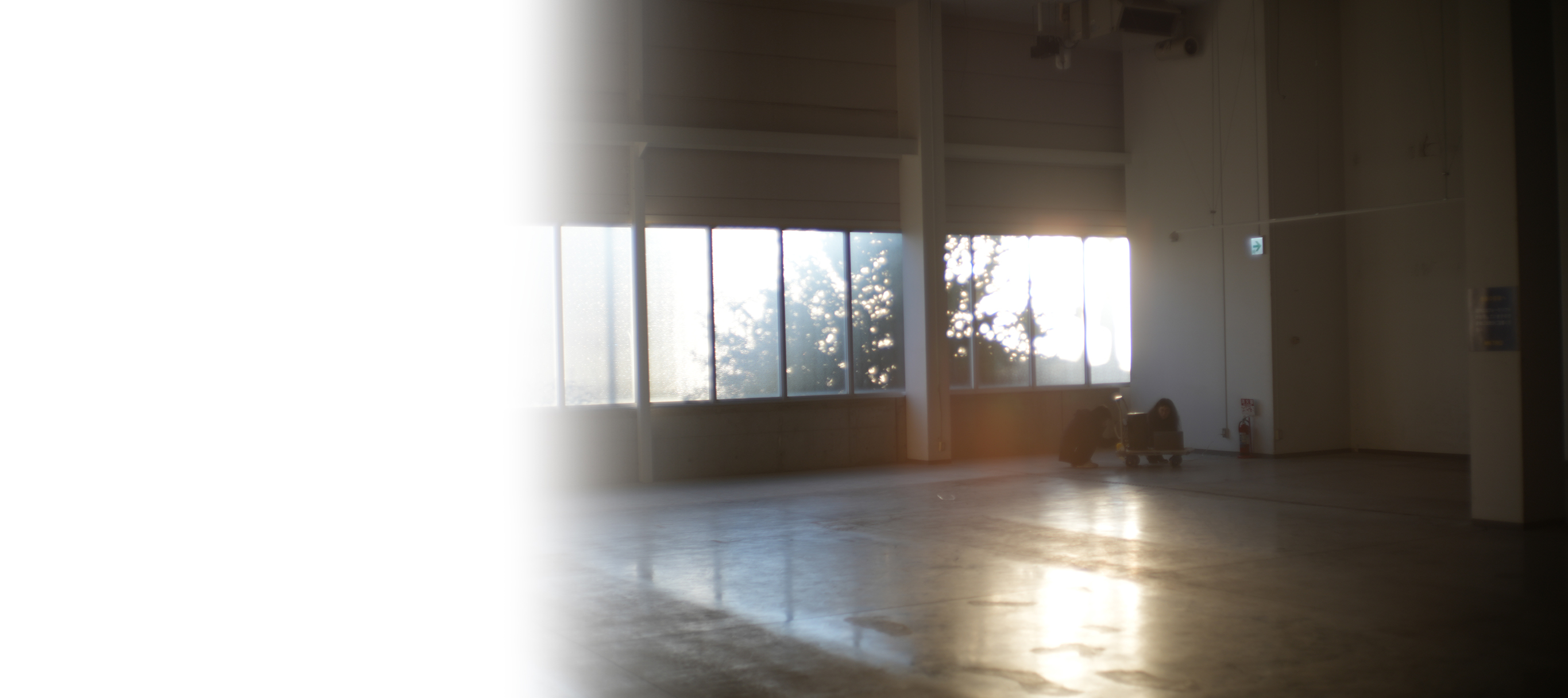
午後は場所を移動して、実際に一つの空間で音とビジュアルアートを組み合わせてみるワークショップだ。会場に使用したBLUE CUBEは、多摩美のキャンパスから徒歩5分の元大型スーパーだった巨大な空間。将来は多摩美のサテライトスペースとして、美術館や多⽬的スペースを備えた新施設となる構想が進行中だという。まだなにも始まっていない空っぽの空間にはスーパーの面影があちこちに残り、不思議な途中感が漂っている。
In the afternoon, and at a different venue, a workshop was held for participants to try and combine sound and visual art in an actual space: BLUE CUBE, a large space five minutes by foot from the Tama Art University campus, that was once a supermarket. Future plans are being discussed regarding the use of this space as the university’s satellite venue such as a museum and a multi-purpose space among others. No concrete steps have been taken yet, so at the moment it is still an empty space with traces here and there hinting at its former function, and overall, an odd, “makeshift” kind of feel.
今回のワークショップは、音に対する新しいアプローチや手法を発見し、普段はやらないようなアイデアにも挑戦してみることが狙い。カースは、さきほどのサウンドスケッチを素材に、音を使ってこの空間にアプローチしてみようと提案した。大学からスピーカーやマイク、プロジェクターなど、必要最低限の音響装置等を持ち込み、あとはそこにあるわずかなものを使い、2時間でなにかをつくってみること。「完璧を目指さなくていい、空間を楽しんで」とカース。生徒たちはがらんとした空間を歩いては立ち止まりながら空間を読み、音とのつながりを探っていった。
一見、空っぽの空間のようではあるが、空間を構成する要素に注目するとさまざまな特性が現れる。空間を支える太いコンクリートの柱、迷路のようなバックヤード、棚と壁の隙間、薄暗い隅、長い残響音。眼と耳と体を使って思案していた生徒たちは、次第に自身のアイデアに向かってあちこちに散らばっていった。カースは彼らを順に巡って彼らのプランに真剣に耳を傾け、先生と生徒ではなく、一対一のアーティストとしてアドバイスした。
「誰もアーティストになれる方法を教えてはくれません。インターンをしてなれるものでもありません。アーティストは試行錯誤して自分で方法を見つけていくしかないのです。だからこそ学生と関わるときには、失敗することを恐れないで、諦めないでと伝えることが重要だと思っています。私は一人一人のところへ行き、アイデアが発展していくようすを見ながら、私の経験からどのようにサポートできるかを考えていました」
The aim of this workshop was to encourage participants to tackle some ideas that they would normally put on the back burner, and discover new approaches to sound and methods of working with it. Kahrs suggested to use the aforementioned audio sketches to approach the space the workshop took place in from the aspect of sound. Some basic audio equipment such as speakers, microphones and projectors, was provided by the university, and otherwise the students just used the few things that were lying around, to take on the challenge of creating something within two hours. The role of Kahrs was that of an adviser who encouraged them to “enjoy the space rather than aiming for perfection.” The students walked around the empty space, while stopping here and there to scan the place and find clues for connecting it with the sounds they had recorded or found.
Although there seemed to be nothing at all in this space, there were a number of characteristic features that the students noticed when paying closer attention to the constituent elements, such as massive concrete pillars, a maze-like backyard, gaps between shelves and walls, dark corners, and echoing sound. Once they had worked out their concepts using their eyes, ears and bodies at large, the students dispersed across the space to put their respective ideas into action, while Kahrs walked around to individually inquire about their plans and offer advice – not as a “teacher” but as a fellow artist.
“Nobody teaches you how to become an artist. It’s not something that you can become by doing an internship either. All that an artist can do is find his or her own style by way of trial and error. That’s exactly why I think it is important that I convey to students that they should not be afraid of failure, and not give up after doing something wrong. So, I walked around and observed how each of the students were trying to elaborate their own ideas, and then thought about how I could utilize my own experience to offer support.”
そして夕暮れ時。あちこちから響くノイズやおもちゃのクリスマスソング、お囃子、声・・・。さまざまな音が混ざり合い、なにもなかった空間はエキサイティングな実験場となった。ノイズで空間を構成した者、パフォーマティブな解釈をした者、映像から空間を捉えた者、外の灯りの変化に反応した者など、7人の異なるアプローチで同じ空間に挑んだ実験的なセッションは、創造の時間を共有した充実した体験となった。そしてその様子を見守ったカース自身も、ポジティブなフィードバックを得たという。
「午前中に彼らのプレゼンを聞いて、作家としての興味や情熱、作品のクオリティに感心しました。特に印象的だったのは、彼らがオープンで、自分のアイデアを堂々と表現していたことです。第2部では、たった2時間で全員が小さな作品をつくりあげました。私はそばでサポートに徹しましたが、むずかしい空間にもかかわらず、それぞれがユニークな場所を選び、勇敢に挑戦する姿に感動しました。ワークショップがもう一日あったら、空間での音の相互作用を確かめあってさらに深まったでしょう。長い一日でしたが、素晴らしい時間でした」
In the evening, the originally empty place had turned into an experimental stage that was now filled with an exciting mixture of various noises, toys playing Christmas songs, voices and musical accompaniment, and all kinds of other sounds. Some constructed the space with sound, others offered performative interpretations, filled it with imagery, or incorporated changing (traffic) lights outside the venue. It was an experimental session with seven players approaching the same space in seven different ways, and for the participants a fulfilling experience of sharing their creative time with one another. Kahrs herself, having watched over the students during their work, reports about the positive feedback she received as follows.
“In the presentations in the morning, I was impressed by their interests and their enthusiasm as artists, the quality of their works, and particularly also how openly and confidently they discussed their ideas. In the second part, each of them made some kind of small work within only two hours. My part was to walk around and offer support, and I was really moved to see them choose unique places regardless of the difficult conditions at this particular location, and bravely face the challenge. If we had just one more day for the workshop, I guess we would have examined how the different sounds interact within the space, and refined the works a bit more. After all, it was a long day, but we had a fantastic time.”
東京の音
The Sounds of Tokyo
2ヶ月半の滞在中はいつになく外に出てアクティブに活動していたというカースにとって、東京はどんな街に映ったのだろう。印象に残ったのは、やはり都市に流れる音や音楽だった。
「東京の中心ではたくさんの音や音楽があふれていて、まるで日記をつけるようにそれらを録音しました。街のスピーカーから流れる軽いBGMも、誰かがその場を少しだけコントロールしているように感じられて興味深かったです。また、ものすごく人が多いのにみんな静かで、それが少し不気味でもありました」
アンダーグラウンドなライブハウスにも足繁く通い、世界で知られる東京の実験音楽とノイズ音楽のリアルを体験した。
「これは楽しいリサーチでした。ライブハウスはどこも本当に小さいけれどエキサイティングな場所でした。その小さな箱でいろいろなことが試されて、面白いものが生まれます。アーティストが自分を磨いて成長していくには、実験と経験を重ねることのできる小さなスペースが必要です。こうした場所の重要性、生き残る方法についてもいろいろと考えさせられました」
So, how did Kahrs herself perceive Tokyo over her two-and-a-half month stay in the city, being on the road and more active than when she is at home in Germany? Rather unsurprisingly, what caught her attention first and foremost were the sounds and the music she heard in the streets.
“The central areas of Tokyo are overflowing with all kinds of sounds and music, which I recorded just like making entries in a diary. Even hearing the light background music that is playing from speakers in the streets was very interesting for me, as I seemed to feel the presence of someone controlling things ever so slightly behind the scenes. At the same time, seeing so many people in one place, but all of them being so quiet, felt almost uncanny.”
She frequently visited underground live music venues, to experience first-hand Tokyo’s internationally renowned noise and experimental music scene.
“The research was great fun. The live music clubs were all tiny but truly exciting places. I saw all kinds of interesting things going on and being created in those little rooms. They are essential spaces for repeated experimentation and experience, which is just what artists need to do in order to develop and improve. The experience inspired me to think about the importance of such places, and about how an artist can survive.”
京都や広島、福岡、そして以前から興味を持っていたという信楽焼のたぬきのリサーチのために、滋賀県立陶芸の森を2度訪れた。音を通して街を知り、音楽によって人々とつながり、2ヶ月半をフルにリサーチに費やした。充実した贅沢な時間だったと振り返る。
「私の作品にはリサーチとコラボレーションが不可欠なので、その街や人々を知らずに作品を作ることはできません。今回のレジデンスでは、アウトプットをする必要はありませんでした。制作のプレッシャーがなかったことで、出会った物事に集中して理解しようと努めることができました。将来の作品のアイデアは少しあるのですが、まだはじまりにすぎません。ただ作品をつくりたいという意志ははっきりとあります。そのためにも今回インプットしたものを、時間をかけて消化して、もっと理解を深めたい」
アーティストがアーティストであることに集中できる「メルセデス・ベンツ アート・スコープ」のアーティスト・イン・レジデンスは、性急に成果を求められないからこそ、偶発性やチャンスに開かれている。それが長い目で多くのアーティストに成長のきっかけを提供してきた。2025年は、ベルリンでの大きな個展をはじめいくつも展覧会が予定されており、アーティストとしても飛躍の年を迎えるであろうカースだが、今回のレジデンスから始まる新章の予感も十分にある。今回のレジデンスの成果がいつかどのようなかたちで具体化されるのか、新しいプロジェクトのはじまりに期待したい。
In addition to Kyoto, Hiroshima and Fukuoka, Kahrs also visited the Shigaraki Ceramic Cultural Park in Shiga twice for research on Shigaraki ware tanuki (raccoon dog) figurines, which she had been interested in before coming to Japan.
The two and a half months that she fully dedicated to her research, getting to know cities through sound, and connecting to people through music, Kahrs remembers as a precious and fulfilling experience.
“Research and collaboration are indispensable parts of my work, and I cannot create anything without knowing a place and its people. In this residency, I was not required to produce any output. As there was no pressure to create anything, I was able to focus on the encounters that I made, and dedicate myself to understanding the things that I came across. I do have a few ideas for my next work, but it’s all still at a very early stage. But what is perfectly clear, is my will to create artworks, and for that, I am going to spend some time digesting the input that I got from this program, in order to gain a deeper understanding of it all.”
The artist-in-residence program "Mercedes-Benz Art Scope" provides artists with opportunities to focus on being an artist, and just because participants are not required to rush and present results, there is much room for chance encounters and accidental products. Thus far, many artists were given such opportunities to develop in the long term. For 2025, several exhibitions including a large show in Berlin are being planned, and for Annika Kahrs, who is likely to make further leaps forward as an artist this year, this residency has quite certainly opened up a new chapter in her career. Once her new project gets going, we can look forward to witnessing the concrete shapes that the fruits of her residency will manifest themselves in.
アニカ・カース トーク+ワークショップ
「Shifting Sounds - on the possibilities of sound and music in visual arts」
日程:2024年11月15日/2024年11月29日
企画協力:
NPO法人アーツイニシアティヴトウキョウ[AIT/エイト]
ワークショップ参加学生:
稲村真優(多摩美術大学 芸術学科3年)
宮内友香(多摩美術大学 絵画学科日本画専攻4年)
LI Lin(多摩美術大学 絵画学科版画専攻4年)
HAO Yang(多摩美術大学大学院 博士前期課程デザイン専攻情報デザイン研究領域1年)
五井佑加子(多摩美術大学大学院 博士前期課程芸術学専攻1年)
WU Lingxian(多摩美術大学大学院 博士前期課程デザイン専攻情報デザイン研究領域2年)
古山寧々(多摩美術大学大学院 博士前期課程デザイン専攻情報デザイン研究領域2年)
担当教員:
久保田晃弘(多摩美術大学大学院EWS、情報デザイン学科メディア芸術コース教授、国際交流センター長)
ムーニー・スザンヌ(多摩美術大学大学院EWS、国際交流センター准教授)
大島徹也(多摩美術大学美術館館長、芸術学科教授)
Talk and Workshop by Annika Kahrs “Shifting Sounds - on the possibilities of sound and music in visual arts”
Date:15th and 29th of November, 2024
Cooperation/planning:
Arts Initiative Tokyo [AIT]
Workshop participating students:
INAMURA Mahiro, 3rd year student at Tama Art University, Department of Art Studies
MIYAUCHI Tomoka, 4th year student at Tama Art University, Department of Painting, Japanese Painting Course
LI Lin, 4th year student at Tama Art University, Department of Painting, Graphic Arts Course
HAO Yang, 1st year student at Tama Art University, Graduate School of Art and Design, Department of Information Design, Media Art Course
GOI Yukako, 1st year student at Tama Art University, Graduate School of Art and Design, Department of Art Studies
WU Lingxian, 2nd year student at Tama Art University, Graduate School of Art and Design, Department of Information Design
Nene Koyama, 2nd year student at Tama Art University, Graduate School of Art and Design, Department of Information Design
Faculty in charge:
KUBOTA Akihiro, Chief Professor of Tama Art University Graduate School Project EWS, Professor of Department of Information Design, Media Arts Course, Manager of International Exchange Center
Suzanne MOONEY, Associate Professor of Tama Art University Graduate School Project EWS, International Exchange Center
OSHIMA Tetsuya, Director of Tama Art University Museum, Professor of Department of Art Studies